It is a pleasure to welcome you to our School which is at the forefront of teaching and research in the social sciences in Australia.

Welcome to the School of Social and Political Sciences. We are home to a dedicated team of academic and professional staff in the disciplines of Anthropology and Development Studies, Criminology, Political Science, and Sociology. Some of our staff also teach into the Faculty’s Gender Studies program. Through excellence in teaching and research, and in partnership with our communities, we are:
- Redefining and addressing today’s most important challenges
- Creating, curating, challenging and enriching knowledge; and
- Reshaping understandings of our multicultural and swiftly changing world
Our work is underpinned by our values of intellectual freedom, integrity, social justice, diversity, and environmental sustainability. Through our research and teaching our ambition is to redefine the world and change what matters.
Professor Jennifer Balint
Head of School of Social and Political Sciences
-
Anthropology and Development Studies
Our programs investigate the diverse ways that people today interact, organise and find meaning in their lives. We analyse the processes of social, economic, political and cultural change that underlie poverty, inequality and insecurity in the contemporary world.
-
Criminology
Criminology is the critical examination of crime and justice policy and practice. Criminology at Melbourne seeks to understand how society constructs and responds to crime.
-
Gender Studies
Our program explores the significance of gender and sexuality on a range of discourses embedded within culture, identity and global history.
-
Political Science
We are one of the top-ranked programs for the study of political science and international relations in the region with a reputation for excellence in research and teaching.
-
Sociology
Our program investigates the complexity and breadth of living in today’s societies, challenging expectations and assumptions about what it means to live with others.
Through our research the School of Social and Political Sciences aims to redefine the world, changing what matters. We undertake disciplinary and multi-disciplinary research which is underpinned by our shared values of intellectual freedom, integrity, social justice, diversity, and environmental sustainability.
Featured projects
Our world class research is influential in many fields beyond academia and our social and political scientists make a significant difference to people’s lives both nationally and internationally. Explore our broad range of current and completed research projects.
-
Community employment partnerships
This project investigated how a successful model for promoting employment for people with disabilities could be adapted for implementation in Australia.
-
Federalism and multiethnic political parties in Asia: Blending accommodation and moderation
This project aims to discover the kinds of hybrid federal designs and electoral systems that are most likely to be successful in multiethnic countries in Asia.
-
Improving Indigenous health and wellbeing over the family life course
This project aims to reduce Indigenous health inequalities, a major social and economic problem in Australia.
-
Women’s collective action and the village law in Indonesia
How women are driving change and shaping pathways for gender-inclusive development in rural Indonesia.
-
Minutes of Evidence
A collaboration between Indigenous and non-Indigenous researchers, education experts, performance artists, community members, government and community organisations that sheds light on the little-known history of the 1881 Victorian Parliamentary Coranderrk Inquiry.
-
Nga Tūmanakotanga
Nga Tūmanakotanga (Turning the Tide on Prison Violence) is a project investigating the commissioning of institutional violence and how it might best be prevented.
-
Scaling-up the impact of voluntary sustainability standards
From niche labels to catalysts to systemic change?
-
The future cemetery
This research investigates the potential of new and innovative technologies to be incorporated into Australian cemeteries and memorial spaces.
Collaborations and partnerships
Our collaborations and partnerships are truly global in nature and generate significant impact both in academic and non-academic contexts.
Research networks
-
Comparative Network on Refugee Externalisation Policies (CONREP)
CONREP is an international, interdisciplinary six-university network that researches the impact and effects of the externalisation of refugee policies in two regions.
-
Europe-Asia Security and Trade Network (EAST)
The Jean Monnet Erasmus+ Network on Europe-Asia Security and Trade (EAST) brings together an international, interdisciplinary network of experts.
-
Justice-involved Young People (JYP) Network
Connecting people working for better outcomes for justice-involved young people in Victoria.
-
Medicinal Psychedelics Research Network (MPRN)
The Medicinal Psychedelics Research Network (MPRN) brings together multidisciplinary researchers, policymakers and regulators to focus on the emerging field of medicinal psychedelics.
-
Myanmar Research Network
Myanmar Research Network (MRN) is a network of academics, practitioners and students within and beyond the University of Melbourne. The Myanmar Research Network regularly engages in cutting edge research, seminars and events focusing on socio-political, historical, economic, development and other issues in Myanmar or affecting Myanmar communities.
-
Narrative Network
The Narrative Network is a network for academics at the University of Melbourne interested in narrative research, founded by Ashley Barnwell and Signe Ravn. The network comprises 70+ members from across the Faculty of Arts and beyond.
-
Disability, Diversity and Inclusion Initiative
Centering the voices, experiences and expertise of people with disability across the life through research, training, engagement, and service activities
Contact us
The School welcomes research collaboration.
Contact us to learn more about partnering opportunities with the School of Social and Political Sciences.
-
Undergraduate
Information for current undergraduate students including essay writing guides and citation styles, cover sheets, minor thesis due dates, policy, and the On Country field trip subject.
-
Honours
Information for current Honours students including essays and assignments, extensions, the minor thesis, and policy documents can be found here.
-
Graduate coursework
Information for current graduate coursework students including essay writing guides and citation styles, cover sheets, minor thesis due dates, and policy.
-
Graduate research
Information for prospective students and those currently enrolled in a PhD program.
-
Work Integrated Learning (Internships)
Information for students interested in applying for the Parliamentary Internship program, Public Affairs Internship program and Master of Development Studies Internship program.
The health, safety and wellbeing of our community is our number one priority. Our events program is now online. Find out more about the University’s COVID-19 response.
Brotherhood of St Laurence partnership
The University’s partnership with the Brotherhood of St Laurence is one of the key community relationships within the University.
The University and the Brotherhood share a history of collaboration going back at least 50 years, with a more formalised approach established in 2003 to broaden the partnership’s cross-faculty links and encourage greater University-wide collaboration. A Memorandum of Understanding was completed in 2013 which drove the work for the next five years. The partnership continues to flourish to this day.
This long-standing partnership focuses on a joint research agenda that addresses social inclusion across the life course, with a particular focus on helping to shape inclusive growth, social inclusion and poverty-prevention policies.
Scope – University of Melbourne Partnership
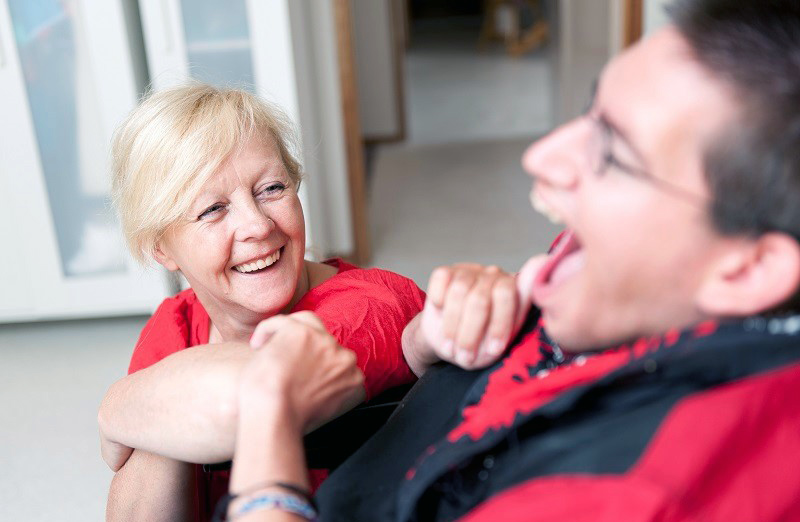
The Scope – University of Melbourne Partnership is a collaboration that draws upon the interdisciplinary expertise of staff from both University of Melbourne and Scope Australia.
Working with the emerging expertise of University of Melbourne students, the partnership is a leader in disability research, teaching and advocacy, informed by rigorous scholarship and the lived experience of people with disability.
Together, the University of Melbourne and Scope Australia are collaborating on a range of activities that are improving services to, and the lives of people with disability and their families. These activities are interdisciplinary in their focus, involving multiple schools and faculties of the university. The activities also extend beyond the university, to engage with people with disability and their families in the community, collaborations with other leading service providers, and government agencies.